Where the 2026 Creative Breakthrough Is At: Feel Something. Win Something.

Passion Doesn't Get Relegated: What Deportivo Municipal's Cannes Win Teaches Brand Strategists
Why it Matters
Deportivo Municipal's Cannes Grand Prix-winning campaign is a genuinely inspiring reminder of what happens when a brand stops chasing mass-market validation and seeds itself entirely in the hyper-local community.
When a historic club gets relegated to the third division, corporate sponsors inevitably flee. The mass-media broadcast metrics disappear, and so does the money. But corporate sponsors look at a club through a spreadsheet. A community looks at a club as an extension of their actual soul.
By replacing a single corporate logo with a pixelated grid of 1,000 fan-owned local businesses, the club executed a brilliant, culturally centric pivot. They proved that while corporate capital is transactional and fickle, neighborhood passion is permanent and unyielding.
For strategists and communicators, this is the blueprint for how authenticity and cultural resonance can be found anywhere. Even in funding.
Deportivo Municipal didn't try to manufacture artificial corporate interest or beg a distant conglomerate for a pity check. They tapped directly into the raw emotional infrastructure of the community that has loved them for generations. And in doing so, reminded the entire industry that the true gravity of any sports asset doesn't come from a multinational headquarters. It comes from the roots of the community it represents.
Food for Thought
The sheer brilliance of this campaign lies in understanding one thing: passion doesn't get relegated.
Multinational corporations sponsor sports teams to hijack attention and drive short-term commercial ROI. That means they are structurally incapable of staying through the dark times. But a community's relationship with its local team isn't a commercial contract. It is a lifelong, generational identity.
For me, this is a profound lesson in culturally centric design and local seeding. When you look closely at that jersey, it is no longer just sportswear. It is a sacred communal artifact. The fans aren't just donating money to save a team. They are seeing their own daily struggles, hard work, and local pride physically woven into the fabric of the club. It completely redefines the concept of a sponsor, turning it from a distant, wealthy intruder into an active co-author of the team's history.
For communicators across any sector, the ultimate takeaway is an uncompromising truth about where real brand equity lives. It is found by embedding your organization so deeply into the authentic, gritty, everyday passion of your baseline community that your survival becomes their personal mission.
The Faroe Islands Space Program: How SKF Rewrote the Rules of B2B Storytelling
Why it Matters
SKF's Cannes Creative B2B Grand Prix-winning campaign, "The Faroe Islands Space Program," created by NORD Stockholm alongside tidal energy pioneer Minesto and local utility SEV, is a spectacular paradigm shift for heavy industry communications.
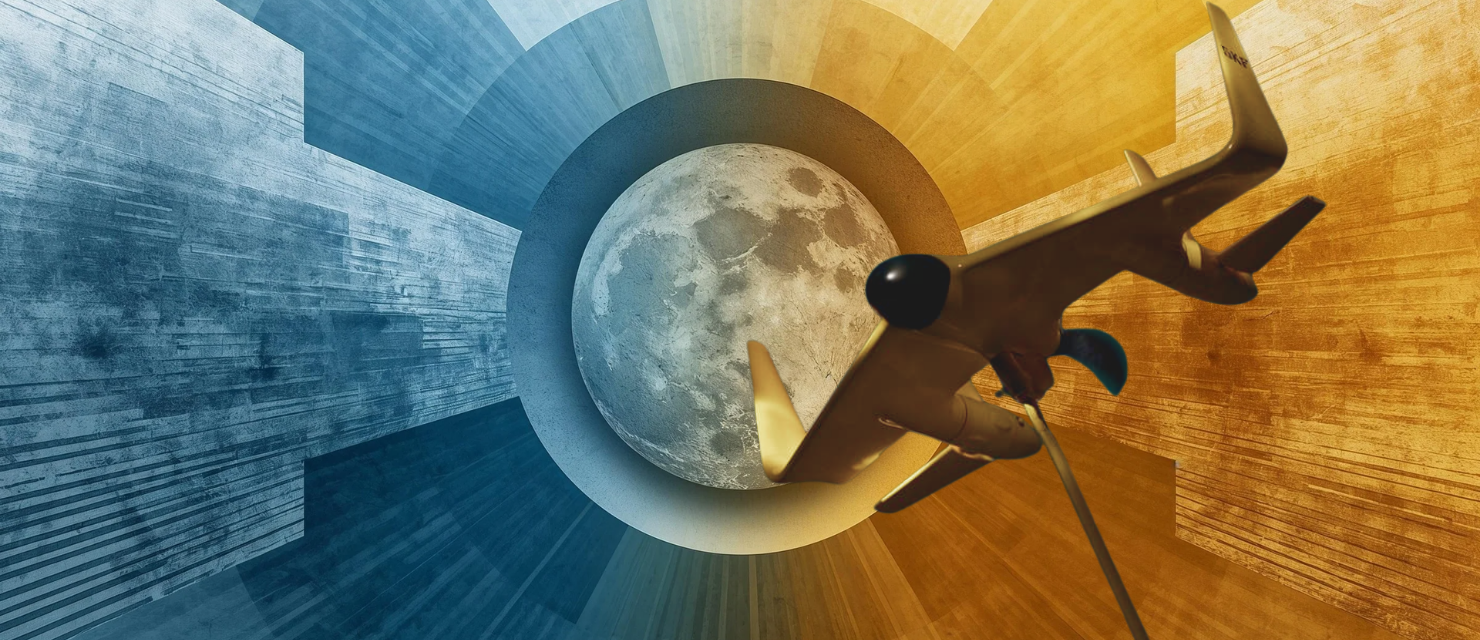
Let's be honest. Traditionally, the hard B2B playbook is trapped in a cage of rational reductionism. Dry spec sheets, mechanical tolerances, engineering data pitched exclusively to a closed room of procurement officers. SKF decided it was time to defy gravity. Instead of shouting about product durability, they launched a "space program" with no intention of leaving Earth. They brilliantly reframed their mechanical components as tools for harvesting the moon's actual gravitational pull via ocean tides.
For those of us in brand marketing and PR, this is about seeing bridges where others see walls. Good storytelling can come from the most unimaginable places, including the cold, hard world of industrial manufacturing. This creative bravery transformed an invisible mechanical component into an unmissable symbol of innovation, driving immediate, tangible business conversations and winning at the highest creative level simultaneously.
Food for Thought
The ultimate lesson from the Faroe Islands project is that creative storytelling is not an aesthetic luxury or a vanity exercise—it is a hyper-practical tool designed to solve even brutal business problems.
This is really a masterclass in using narrative to fundamentally re-index an organization's position in general visibility. And that sounds complex. The narrative solved the problem of product “invisibility” by transforming a cold, mechanical component into an unmissable, heroic asset enabling a major clean-energy solution.
For strategists just take away this: creative storytelling is not a soft marketing fluff. It could well be a core commercial engine. True resonance isn't about making your company look interesting; it’s about giving your business metrics the narrative gravity required to break through apathy and commoditazation, even in the hardest of industries.
Quote of the Week
"My connection to a project ends when they say, ‘Picture wrap.’ Because it’s not for me to decide what people will think of it."
by Emilia Clarke on an intimate conversation with Variety

Screen-Fatigued Audiences Are Driving Entertainment Back to the Real World. Luminiscence Shows How.
Why it Matters
Banijay expansion of the immersive multimedia spectacle Luminiscence to Seville's San Jacinto Parish, following massive runs in Barcelona and San Sebastián, is a great example of how real-life experiences are dominating a screen-fatigued economy. Especially for content companies.
In 2026, with consumer attention hyper-fragmented and digital ad-blocking at an all-time high, the strategic frontier has shifted back to the physical world.
From a PR and brand perspective, this speaks to something the entertainment industry has been quietly learning over the past few years: the real world has regained enormous traction as an engagement platform. We saw it with Netflix this year. We continue to see it with other major streamers and film studios bringing immersive experiences to audiences who are hungry for something they can actually feel, not just scroll past.
Food for Thought
The ultimate lesson for brand builders across all sectors is that physical reality has become the ultimate premium frontier. The place where digital connection finally translates into a real-life relationship.
The future of brand authority belongs to those who stop trying to capture fleeting attention on a five-inch screen and instead build the infrastructure to envelop the consumer's entire sensory reality. Because the most stable brand equity is still built in three dimensions.
We have spent years optimizing for clicks, impressions, and scroll-stop rates. And yet the moments people actually remember, talk about, and return to are the ones they experienced with their bodies in a room. The brands that will own the next decade of cultural relevance won't be the ones with the best algorithm. They'll be the ones who figured out how to make you feel something you couldn't screenshot.
Other Facts this week
👗 Check the biggest fashion status symbol spotted at Cannes Lions
🎤 See what Cannes Lions reveals about where brand building is headed, marketers are betting big on storytelling over performance ads.
📬 Worth a look: Bose becoming a media company