Apple, Culture Metrics, and Why A Brand Is Already Behind

How Apple Reframes in One Keynote
Why it Matters
Something shifted at WWDC 2026. Apple didn't announce a product. It announced a position, a language.
The most intriguing signal was the how. Through "Apple Intelligence," the company subtly distances itself from the crowded AI narrative while maintaining its identity, adopting a user-oriented approach that emphasizes human-centered moments over technical capability. That's Apple doing what Apple does. In other words: Apple doesn't do AI. It does you.
But look at it closely and this is the first proposition of this weight since "What happens on your iPhone, stays on your iPhone." I say that deliberately. In recent years Apple has nurtured a narrative of evolution. This is something different. It's a technological statement.
Food for Thought
But the real positioning is not even that. Consider what the keynote actually revealed about Apple's brand architecture over the past two years.
Apple has been racing to catch up in AI while frustrations quietly eroded its reputation as the gold standard of innovation. What's genuinely fascinating from a PR standpoint is how Apple structured the narrative to absorb all of that without ever naming it. Apple would never walk onto a stage and say "we failed to deliver what we promised." But they know exactly how to shift the spotlight onto a story that changes the rules of the game entirely. That instinct is something I'm always drawn to.
Apple led with fixes framed as improvements, announced a rebuilt Siri as a natural evolution rather than a correction, and wrapped the whole thing in a CEO farewell that made the room emotional. Voila. The story becomes about legacy and future. Not about the gap between promise and delivery.
That's not spin. There's nothing to spin. It's simply elite brand management.
You Can't Spreadsheet Culture
Why it Matters
The entertainment industry is undergoing a structural shift in how it thinks about competition and attention. The metric is moving away from reach toward something harder to quantify but far more valuable: cultural resonance.
For brand and PR strategists, this is the moment. Sophisticated data methodologies are emerging that attempt to evaluate how deeply a piece of intellectual property functions as an emotional sanctuary for its audience. Because ultimately, the depth of that emotional connection speaks directly to the intentionality a consumer brings to the viewing experience. And the real goal is to measure the exact lift generated when a brand stops interrupting a viewer and instead embeds itself into a predictable, personal ritual.
But… catch. Here's where it gets complicated. What's the right KPI for that? When you attempt to apply clinical dashboards and optimization models to the messy, sacred world of human fandom, you risk something significant: misrepresenting the very identities you're trying to understand. Turning a genuine cultural sanctuary into a transparent, calculated corporate deck.
That dissonance doesn't have a clean answer yet. But it's the most important question in the room.
Food for Thought
Warner Bros. Discovery made a genuine attempt at this, and Netflix did too a few months ago. But my point is broader.
Culture is a massively intricate thing to measure. You cannot analyze one behavior in isolation and ignore everything surrounding it. The complexity has to be represented honestly, and that means a multiplicity of KPIs, some of which no marketing campaign can actually move.
There is no secret sauce here. Not for measuring it, not for acting on it.
Every single beat of a cultural moment requires the same foundational understanding: these moments are almost always born from risk, vulnerability, and unpredictable human weirdness. They are not calculated. They cannot be captured in a single spreadsheet reviewed at the end of the quarter.
So for me, the real work is: stewardship. Actively protecting the emotional sanctity of the fan experience before you ever open a dashboard.
Quote of the Week
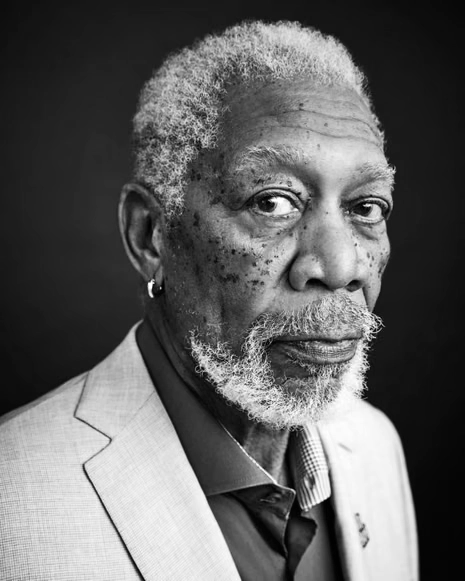
"Challenge yourself; it’s the only path which leads to growth."
by Morgan Freeman
Make the Cut
Why it Matters
There is a particular kind of irony that only PR people truly understand. We spend our days telling brands to show up with intention, to treat every touchpoint as a communication decision, to never let their visual presence drift. And then we look at our own things and realize we haven't touched it in eight months. The problem is that presence is not neutral. A stale visual identity doesn't just sit there quietly. It communicates something. It says: I've been busy. I've been focused elsewhere. I haven't had a moment to look up. For a firm that counsels brands on exactly this, I chose different.
Food for Thought
So this summer, inFocus is doing something about it. Not a rebrand. Something more honest: a seasonal visual activation called the Brand Cut: Summer Collection.
Brand strategists will tell you never to touch the logo this way. Let's do something different.
A seasonal collection isn't an admission that last season was wrong. It's a signal that the brand is alive, paying attention, and moving with cultural energy rather than against it.
The Brand Cut touches the inFocus social presence. Same brand system. Same Electric Blue. Same geometric precision. What shifts is the energy: warmer, more editorial, more in motion. All set in summer.
The Brand Cut goes live publicly on Monday. Spotlight readers get the first look. Your brand is communicating right now, whether you're tending to it or not. Make the cut..
Other Facts this week
📱 Check how loneliness influencers on TikTok are turning introversion into a full content genre — and what it says about how people connect now.
🎬 Read why the Backrooms trend and audience obsession are quietly reshaping what the future of movies actually looks like.
📉 See what The Night Agent's cancellation reveals about how fast a Netflix hit can lose its footing — even at the top of the charts.