Prime Video's Latin America Bet, Netflix as a Hub, and YouTube's Attention Win: The PR Infrastructure Gap


Local to Local: What Prime Video's $2 Billion Investment Means for Latin American Content and the PR Teams Behind It
Why it Matters
Prime Video just announced a $2 billion investment in Latin America between 2027 and 2030. For years, Latin American content operated under an export model. Stories were produced locally, earned regional audiences, and then hoped for international acquisition.
But that model has changed. And changed for good.
International players continue to understand the relevance of Latin American audiences. Understanding that the local-to-local approach is the right way to engage. Why? Because culturally relevant stories are exponentially more powerful than international ones. Because the assumption that international content is inherently better has been successfully eroded. And this investment continues to show that the biggest players are getting it. This isn't just a local production announcement. It's the industry continuing to signal that it believes in Latin America and that we can deliver successful, deeply engaging content across the world.
The global streaming infrastructure is no longer treating the region as a distribution market. It's treating it as a creative origin point.

Food for Thought
Culturally specific, locally produced content is outperforming globally produced content with Latin American audiences. The pan-regional approach, that smoothed-out, accent-neutral, culturally ambiguous content designed to avoid alienating anyone, has been quietly alienating everyone. Specificity wins. Audiences know the difference between a story made for them and a story made at them.
Now, producing a locally specific story with global distribution requires PR and communications teams that can operate fluently in both directions at once. That can protect the cultural authenticity of a story in its origin market while positioning it for international media systems that don't always know how to receive it.
Most communications teams in the region are built for one or the other. Local PR teams know the culture but not the global architecture. International communications teams know the global infrastructure but flatten the cultural specificity that made the content worth investing in.
The content ambition deserves communications sensitivity that matches it. The extraordinary stories being developed across Latin American markets need strategic communicators who understand that the same cultural specificity that makes them resonate locally is precisely what makes them travel globally. Not despite it.
The $2 billion is arriving. The question is whether the communications infrastructure will be ready when it does.
If Netflix Hosts Peacock and Fox One, Who Controls the Narrative? The PR Question Nobody Is Asking.
Why it Matters
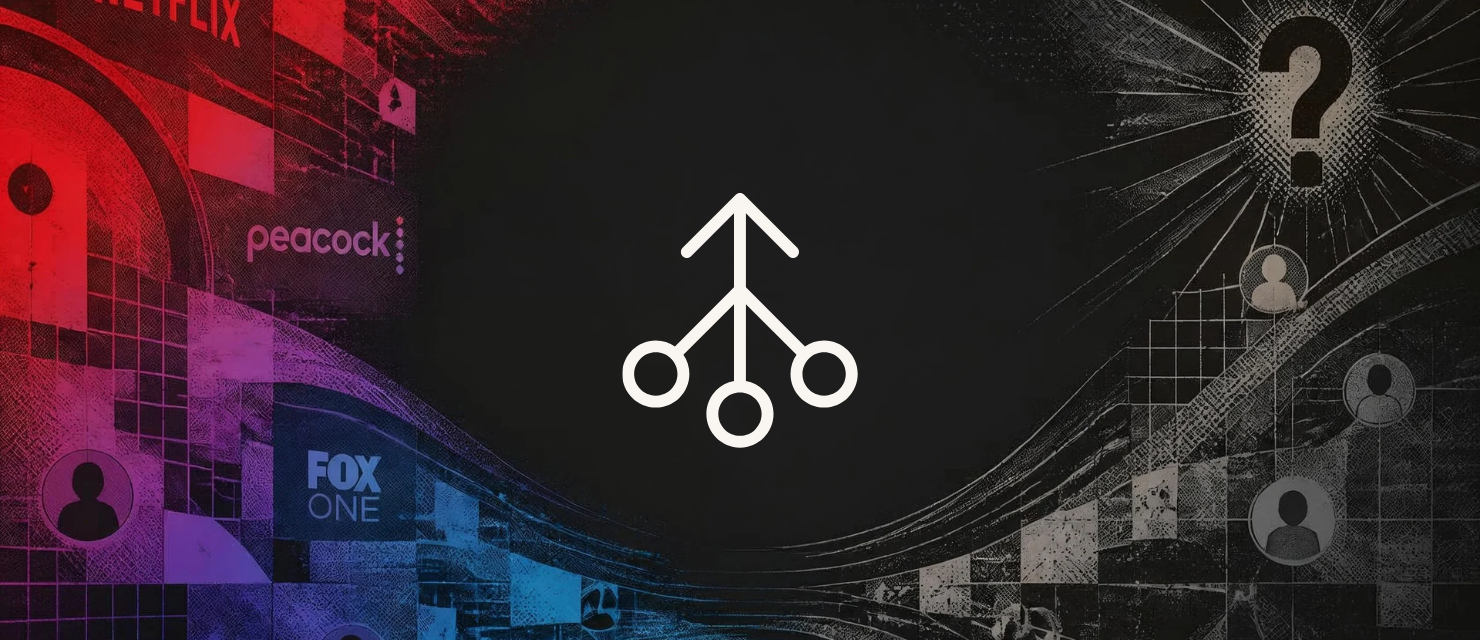
Netflix is reportedly exploring one of the most structurally significant shifts in streaming history. Rather than remaining a closed ecosystem, the platform is considering hosting Peacock and Fox One directly inside its app, functioning as both a subscription storefront and a unified content hub for competing catalogs.
This isn't just a business story. It's a campaign architecture story as well that nobody is talking about yet. You're wondering why, right? Simply: it's what happens to your campaign when this becomes true.
Food for Thought
Here's the potential problem sitting inside this shift for PR and marketing.
If Netflix becomes the front door for Peacock and Fox One, a new series on either platform is no longer just a Peacock launch or a Fox One launch. It's a launch that lives inside Netflix's recommendation engine, Netflix's marketing flywheel, and Netflix's subscriber relationship.
Who controls the narrative when the platforms have competing interests in how the same show is positioned? Because this will happen.
I know. We already have aggregators and distributors and this doesn't happen often. But none of them have the data power Netflix has. Because Netflix can easily say: if you want this to be successful, we need to position it this way. While Peacock could easily be pointing in a completely different direction.
And then there's the discovery or retargeting layer problem. But well, that's somebody else's problem.
The real PR infrastructure question is whether the communications teams supporting content on Peacock and Fox One are ready to operate inside someone else's architecture rather than their very own.
YouTube Is Now the Biggest Screen in the Room. Why Are We Still Treating It as Secondary?
Why it Matters
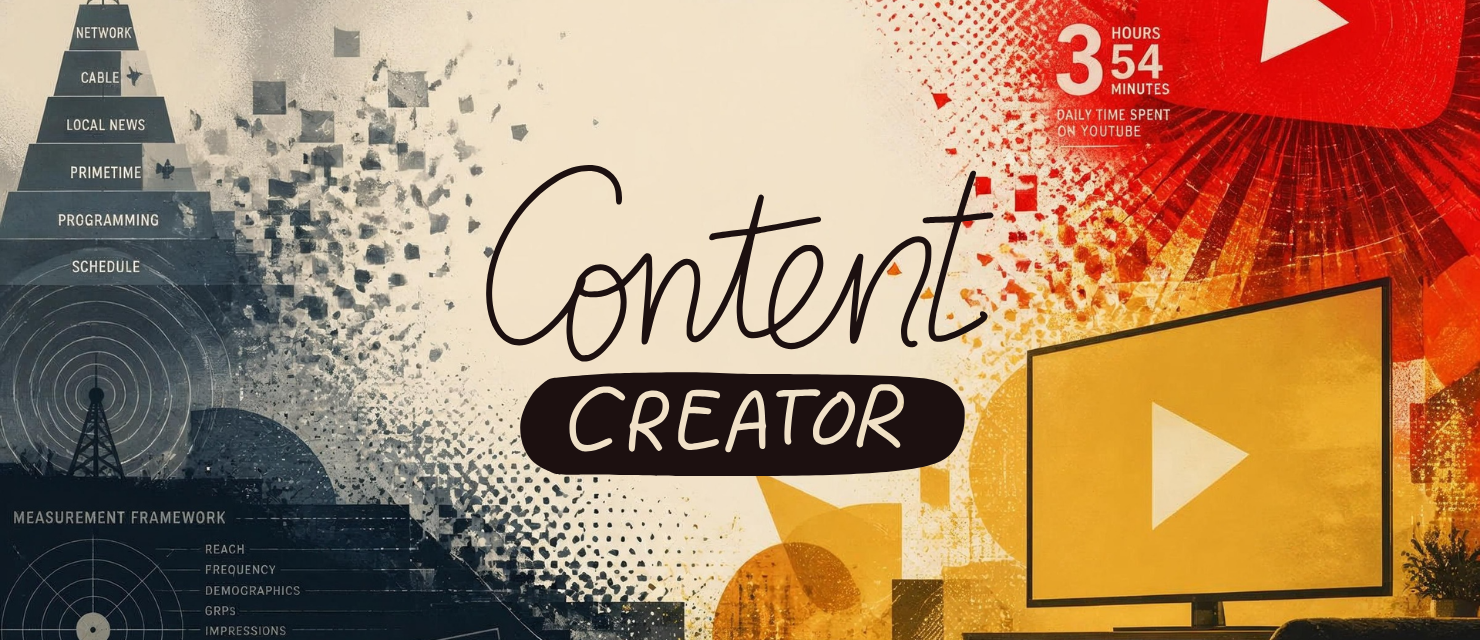
Americans now spend 3 hours and 54 minutes daily with YouTube, TikTok, and social video. They spend 3 hours and 20 minutes with live TV and streaming combined. And 23% of Americans primarily watch YouTube on their television, not their phone.
That last data point is the one worth sitting with. YouTube isn't competing with television anymore. It's sitting where television used to sit, on the biggest screen in the room, watched for longer than most people admit, and commanding more daily attention than Netflix, Peacock, and every other streaming service combined.
The Attest 2026 Attention Economy Report makes this impossible to dismiss as a trend. This is the baseline now. And for anyone managing creator relationships, building creator-led campaigns, or advising brands on where their communications investment should go, this data changed the negotiating landscape entirely.
Food for Thought
Brands and PR teams are still pricing, briefing, and measuring creator partnerships against a media hierarchy that the data says no longer exists.
Creator content is routinely positioned as supplementary to broadcast or traditional placements. The original segment is the primary win. The creator integration is the added value. The measurement framework still anchors credibility to legacy media reach, treating YouTube placements as secondary regardless of where the actual audience is spending its time.
The data says the hierarchy should be inverted. The negotiating leverage, the audience attention, and the measurable daily impact are sitting with creators. Not with the networks.
The data just handed creators the most powerful negotiating argument they've ever had. The audience is there. The attention is there. The screen is there. The question is whether the brands, marketing and PR teams on the other side of the table have updated their frameworks to reflect what the numbers are actually saying.
Because if they haven't, they're negotiating against a map that no longer matches the territory.
Other Facts this week
🏟️ Check how sports marketing is opening the playing field — new brands are finding real opportunity in the moment.
📺 Read why appointment viewing is making a comeback and which shows are actually getting people talking again.
📡 See what sports TV fragmentation reveals about whether platforms like YouTube TV can hold it all together.
🎾 Worth a look — the US Open is showing exactly how brand partnerships can actually improve the fan experience, not just fund it.
👀 Enjoy the experience of watching one of the best trailers of the season with Netflix's La Bola Negra teaser.