Bad Bunny at the Super Bowl, Microdramas, and Hollywood's First AI Actor: Entertainment's Identity in 2025

The New Primetime Paradox: Can Microdramas Build Brand Equity or Just Addiction?
Why it Matters
The most disruptive play in the streaming wars isn't about bigger budgets, more quality TV, or addictive IP; it's about redefining "primetime" itself. The genius is in abandoning the fight for the living room couch to conquer the millions of "in-between" moments, and no one is mastering this better than the current market leader, ReelShorts.
Their entire brand prop is in positioning. They aren't trying to steal your two-hour movie slot; they're strategically targeting the moments that fill your day—the coffee line, the commute, the 3 AM scroll. Specially for the TikTok gen. This isn't just a content strategy; it's an underappreciated marketing move to de-risk longer discovery for users and own a part of the day traditional streaming could never touch. It's a total reimagining of streaming for an attention economy that values high-engagement, microtransactions, and hybrid revenue models over the traditional primetime slot.
Food for Thought
The microdrama model is a brilliant strategy to capture the fragmented attention of a new generation. But as platforms position this content as "more value" to differentiate it from disposable social media, a key question comes to mind: what happens when the addictive, dopamine-loop format becomes the only thing the audience remembers? The real brand risk isn't production quality; it's that the format itself might cheapen the brand. As we train audiences to expect story in one-minute, cliffhanger-driven hits, are platforms accidentally conditioning their users to value the psychological trick over the storytelling, making it impossible to build a true brand value prop and identity in the long run?
Welcome to the Benito Bowl: No English Required
Why it Matters
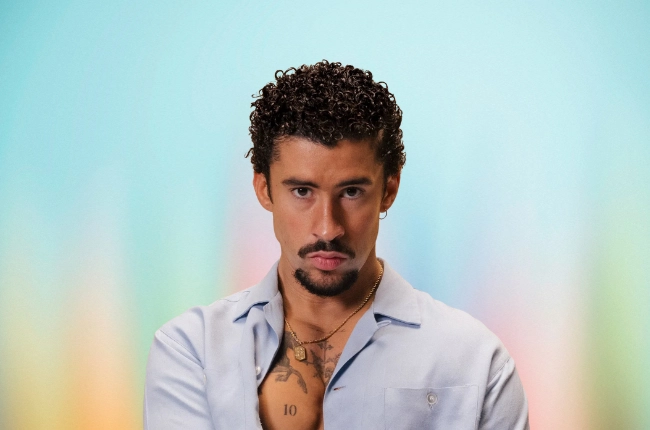
Bad Bunny headlining the Super Bowl isn't just a performance; it's a cultural coronation that sends a powerful message to the entire industry, country and world. This is beyond an ultimate brand play for both the artist, Apple and the NFL. For Bad Bunny, it's the continuation of an undisputed validation of his status as a true global icon, permanently shifting his brand from "Latin superstar" to simply "superstar." 👑 That Bad Bunny has become mainstream is irrefutable, and the Super Bowl halftime show is about money and viewership.
For the NFL and Jay-Z's Roc Nation, this is a masterful PR move to future-proof the halftime show's relevance. By tapping the biggest star in the world, who happens to perform in Spanish, they are making a strategic, in-culture play for the massive, multicultural audience that Bad Bunny commands. This isn't just about representation; it's about proving that the Super Bowl is still the ultimate stage for the artists who are truly defining the global cultural conversation.
Food for Thought
The narrative could be the above. But, a key thing that stays with me when looking at this is: does the NFL now need Bad Bunny more than he needs them? Is this the moment we realize the halftime show is no longer a platform for creating superstars, but a stage that now requires a pre-existing global titan to maintain its own cultural relevance?
And from there, many many lingering questions in my mind that just spiral. Knowing Bad Bunny, can an artist built on authentic rebellion survive the ultimate corporate coronation without losing his edge? Is this a true embrace of culture or just the most strategic demographic rental in history? And while the idea that global superstardom requires assimilation into the English-language can be made is this a shift?
🤔 More questions than answers.
Quote of the Week
"We are in the human business. We have been the human business. We’re going to continue to always be in the human business,” — co-chairman Richard Weitz at WME
Hollywood's Newest Star Isn't Human, and That's a Problem
Why it Matters
Let's cut through the optimistic PR spin. The launch of Xicoia isn't about giving actors a superpower; it's a move that fundamentally devalues what actings is about: human art. The entire business model is built on separating an artist's likeness from their labor, turning their unique craft and presence into a scalable, controllable, and ultimately cheaper digital asset. 🤖
And let’s not be fooled by the "ethical" framework—a marketing narrative designed to calm the very talent it threatens to commoditize. This isn't a PR story about unlocking "entirely new art forms" or giving creators a new canvas for interactive narratives. It’s a story that obscures a terrifying new reality: actors are being asked to sign away their digital soul in a lawless new frontier. This will reshape the talent market by creating a system where the authentic, human performance risks becoming the low-cost alternative to its perfect, tireless, and infinitely replicable digital twin. Sorry, but we are not going to redefine the word Talent.
Food for Thought
The whole narrative for AI is built on efficiency and control. But so much of cinematic history is built on happy accidents and the unpredictable magic of a human performance. By replacing human chaos with digital perfection, are we creating a more efficient industry at the cost of the very serendipity that creates iconic movie moments?
For me, the answer is a hard no—and no PR spin can convince me otherwise.
Other Facts this week
🎧 Search Engine podcast on where The Pitt’s inspiration ends and theft begins.
⚽ Verizon World Cup campaign with David Beckham
🧰 A complete toolbox on how to research key trends on social ad
🍺 A Brewteful Connection: the Netflix and AB InBev deal explained