THE CREATOR ISSUE: The Creator Economy Doesn't Have a Reach Problem. It Has a Brand Problem.

A special edition on the business of creators, personal brand, and what the creator economy still gets wrong.
Creators Deserve Their Own Airspace. But Who Is Building Their Brand to Fill It?
Why it Matters
The creator economy is building its own version of the TV upfront. And the most honest thing anyone said is: it will only work for a small group of select creators who can put scarcity on their calendar and command industry exclusivity.
In other words, the infrastructure being built is for the top 1%. The rest of the creator economy is watching from outside.
But here's what nobody is asking: of the creators who will eventually earn that airspace, what separates them from the ones who won't? It isn't follower count. It isn't platform. It isn't even content quality.
It's the inherent understanding of cultural value proposition.
Food for Thought
The creator economy built itself around reach. Follower counts, view metrics, engagement rates. The entire infrastructure of brand deals, platform monetization, and now upfront negotiations was built to price and sell that reach.
But TV networks don't just sell reach at upfronts. They sell a story. They walk into that room with positioning, narrative, brand identity, and a clear articulation of who their audience is and why that audience trusts them. The inventory is almost secondary to the brand case being made.
Most creators arrive with numbers. Very few arrive with a brand.
And that distinction is where the next frontier of the creator economy actually lives. The creators who will break through into the top tier aren't just the ones who post the most or grow the fastest. They're the ones who have built something coherent enough to survive outside their own feed. A perspective that travels. A voice that means something specific. A public narrative that a brand can align with confidently because it knows exactly what it's aligning to.
That's not a content strategy. That's a communications strategy. And it's the thing the creator economy has almost entirely skipped in its race to scale.
But airspace is only valuable when you have a worth meaning behind you. Building that is the work. And right now, almost nobody in the creator economy is doing it.
TikTok Shop Didn't Just Create a Sales Channel. It Created a New Kind of Creator.
Why it Matters
TikTok Shop crossed $100 billion in gross merchandise value in 2025. It is now the fastest-growing commerce platform in the world. And the creators driving that number aren't influencers in the traditional sense. They are something new.
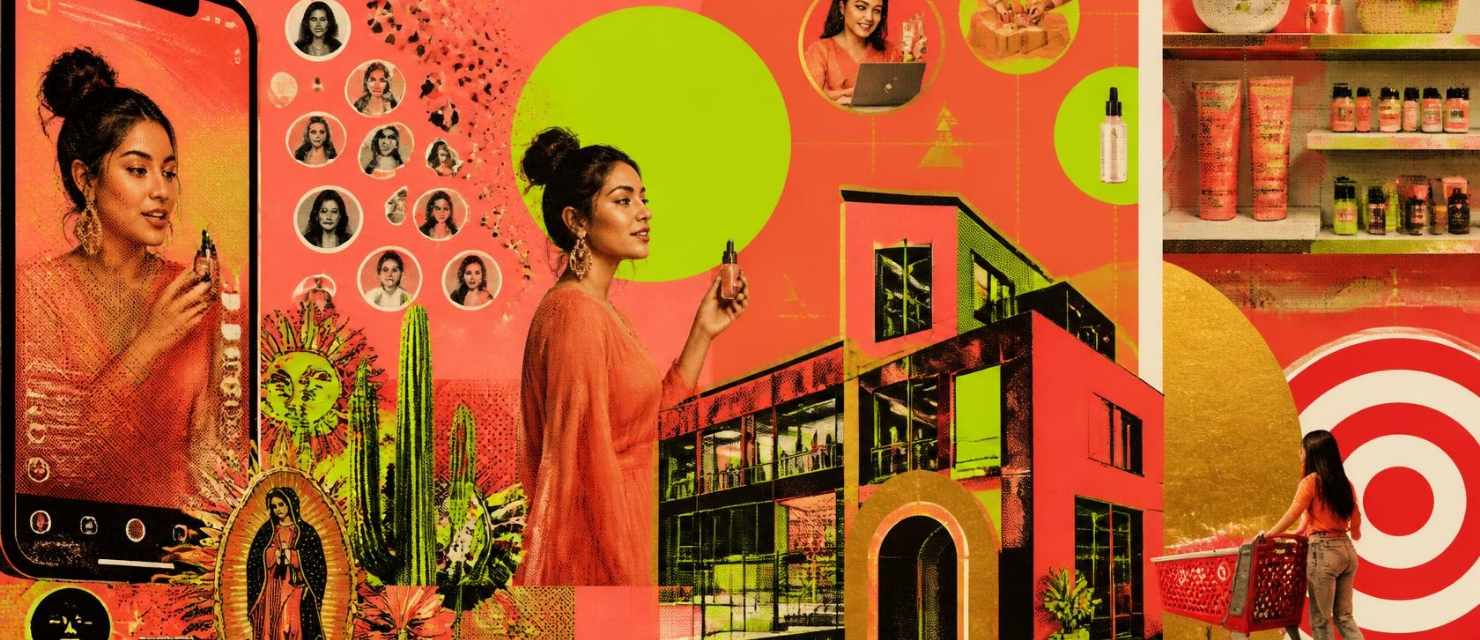
Sarelly is the clearest proof case available right now. Anna Sarelly, a Mexican content creator, and her co-founder Rémi Martini, a former L'Oréal executive, built a clean beauty and accessories brand that became one of TikTok Shop Mexico's top-performing firms. TikTok Shop represents more than 40% of their online sales, outperforming Amazon and their own website. They ran product surveys before every launch that generated between 50,000 and 100,000 responses. Their fiction series "Drama en la chamba" generated 40 million organic views across two seasons.
And last month, Sarelly announced its arrival in more than 600 Target stores in the United States, becoming the first Mexican makeup brand to reach Target's shelves. Backed by six million dollars in cumulative funding from Wollef, Sandbox Studios, Morgan Creek Capital Management, and others.
From TikTok Shop to Target. In two years.
The question worth asking isn't how they did it. It's what it means for how we think about the creator economy going forward.
Food for Thought
TikTok Shop didn't just create a new sales channel. It created a new kind of creator.
The traditional influencer model was built on audience rental. A brand pays for access to a creator's followers for a defined period. The transaction ends. The relationship is transactional by design.
What TikTok Shop introduced is a fundamentally different architecture. When a creator sells directly through the platform, the community stops being an audience and starts being a customer base. That shift changes everything about how a creator thinks about their content, their identity, and their long-term value.
Sarelly used her community not just as a sales channel but as a research and development infrastructure. That's not influencer marketing. That's a vertically integrated media and commerce operation where the community is embedded in every stage of the business.
And here's what the TikTok Shop conversation keeps missing: the creators who will build durable businesses out of this model aren't the ones with the most followers. They're the ones with the most coherent brand identity.The ones whose cultural specificity is so clear and so consistent that it survives translation from a TikTok feed to a Target shelf in another country.
In this case Sarelly didn't dilute her Mexican identity to enter the US market. She used it as the entry point into a US Hispanic Gen Z consumer base that was hungry for exactly that specificity. The brand traveled because it knew exactly what it was.
TikTok Shop gave creators a commerce infrastructure. What determines who actually scales out of it is the same thing that has always determined who builds a lasting brand: the clarity and coherence of what you stand for when the algorithm stops doing the work for you.
Creator Content Is Essential. It's Still Being Treated as a Testing Ground. That Has to End
Why it Matters
At the Variety Entertainment and Technology Summit in Beverly Hills last week, a panel called "The Creator Boardroom: Building Culture and Scaling Partnerships" put something on the table that the industry has been dancing around for years.
Creator content has become essential to how audiences discover, engage with, and connect to brands. And it is still being treated as a testing ground in broader media strategies.
Those two things cannot both be true indefinitely. And the gap between them is exactly where the most important creator economy conversation of 2026 is happening.
The reality is that creator economy is bigger than people think it is. And the brands that are still treating it as an experiment while their competitors treat it as infrastructure are going to feel that gap acutely over the next two years.
Food for Thought
What Tubi is doing here connects directly to everything this edition has been The testing ground mentality has a logic to it. It emerged from a legitimate place. Early creator partnerships were genuinely experimental. Measurement was unclear. Brand safety was harder to guarantee. ROI was difficult to attribute. So brands hedged. They allocated small budgets, ran pilots, and waited for the data to justify bigger commitments.
That logic made sense in 2019. In 2026, it's a strategic liability.
The data exists. The measurement infrastructure is being built, as the Comscore panel at the same summit made clear: creator content deserves the same strategic attention as other media channels, and measurement is now helping unlock that value. The audiences are there. The cultural authority is there. The only thing still missing in too many organizations is the willingness to treat creator partnerships with the same strategic seriousness as a broadcast or a streaming engagement.
Now, this has a twist: the brands still in testing mode aren't just leaving money on the table. They're ceding cultural territory. Every brand that treats a creator partnership as a pilot is implicitly telling that creator's community that they aren't sure this audience is worth a real commitment. Communities notice that. Creators notice that. And the ones with the strongest, most loyal audiences have enough options to work with partners who don't.
The Variety summit framed it as a measurement and infrastructure problem. That's part of it. But the deeper issue is a perception problem. Creator content isn't a new channel to experiment with. It's where culture is being made. Now. And the brands that understand that are building partnerships, not running tests.
The testing ground era is over. The question is which brands have figured that out and which ones are still waiting for permission to commit.
Other Facts this week
🎨 Understand why this: Mattel is turning Bluey into a full-blown fandom engine — and it's a masterclass in making a toy brand feel like a cultural moment.
👖 Read why Gap is leaning into "fashiontainment" with a boy band collab to make retail feel more like a show.
📚 Worth a look — Netflix is teaming up with the British Library to turn rare historical archives into a scripted series.
🎤 See what this year's VMAs reveal about live TV's comeback — viewership jumped 51% and Taylor Swift had everything to do with it.
🎡 Check how YouTube just locked in Coachella through 2030 — a signal of how platforms are betting big on live cultural moments.