Skydance, Messi's Farewell, and Sports as Entertainment: When the Ambition Outpaces the Communications

Paramount, Warner Bros., and HBO Are Now Called Skydance. We've Seen This Movie Before.
Why it Matters
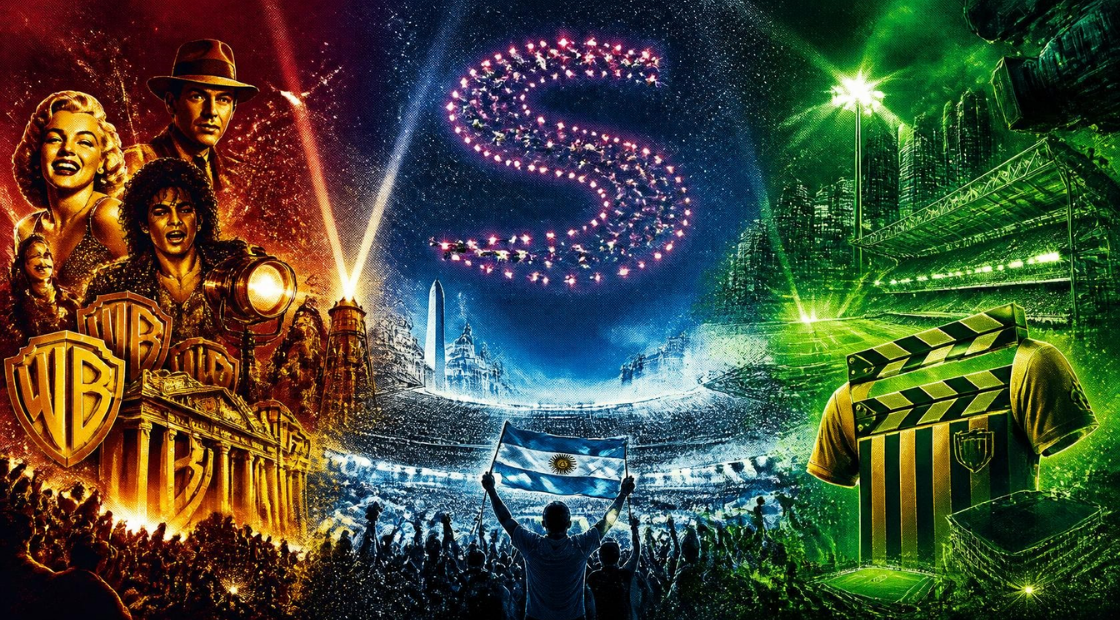
It's official. Paramount and Warner Bros. Discovery are now a single company. The $111 billion merger closed this week, joining them together as Skydance Corp., led by chairman and CEO David Ellison.
Let that sink in for a moment.
The combined Paramount and Warner Bros. Discovery will be named Skydance, a name that came from David Ellison's production company he founded in 2006, itself inspired by his love of aviation. Two of the most storied brand identities in entertainment history, brands that audiences have had emotional relationships with for decades, now sit underneath a corporate identity that most of the world has never heard of.
HBO. Warner Bros. Paramount Pictures. CBS. CNN. All now subsidiaries of Skydance.
For anyone working in entertainment communications, this is the most consequential brand architecture moment in Hollywood in a generation. And the most important question isn't about the financial structure or the content strategy.
It's about the legacy brands underneath.
Food for Thought
Warner Bros. Discovery spent years demonstrating exactly what happens when a corporate parent makes decisions that feel disconnected from the cultural equity of the brands it inherited. The audience relationship with HBO wasn't with Warner Bros. Discovery. It was with HBO. And every time a decision came down from the corporate level that felt like it prioritized the balance sheet over the creative promise, that audience relationship eroded a little more.
I still silently cry about what happened to HBO. And I say that as someone who spent years building communications strategy around that brand.
Now Ellison has assembled an even larger portfolio of legacy brands, and he's named the whole thing after sort of himself. He said Skydance will be a "creative-first home for bold, quality storytelling" and that he never wanted a new corporate identity to diminish, alter or overshadow either one of the legacy brands.
That's the right instinct. The question is whether the communications architecture being built around Skydance will actually protect that promise or gradually erode it.
The brands that have successfully maintained creative-first positioning at corporate scale all share one thing: the corporate parent stays invisible. Apple doesn't talk about Apple when it promotes Apple TV+. A24 protects its brand identity so fiercely that it functions more like a cultural institution than a studio. HBO, at its peak, was the brand. Not the corporate entity behind it.
For communicators in this industry, the Skydance moment is a “case study” in real time. The brands being absorbed, HBO, Warner Bros., Paramount, CBS, each carries decades of audience trust, emotional equity, and cultural meaning. That equity is extraordinarily valuable. It is also extraordinarily fragile.
The communications job ahead of Skydance isn't to make people understand what Skydance means for them. It's to make sure people never stop loving the brands that got them here.
Sancor Seguros and the Case of the Tone-Deaf Drone: What Brand Intrusion Looks Like in 2026
Why it Matters
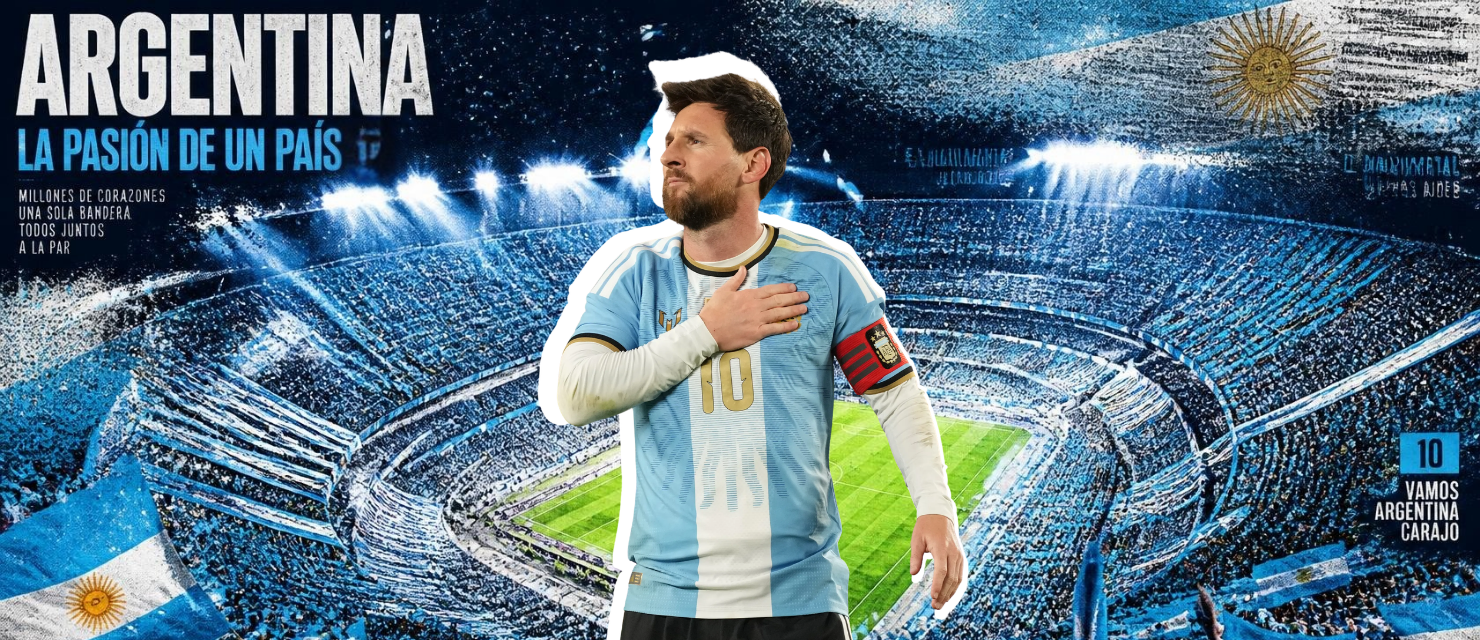
Lionel Messi played his final international match for Argentina on Tuesday night. 208 caps. Eight Ballon d'Or awards. A World Cup. A Copa América. A Finalissima. An Olympic gold. Everything. El Monumental in Buenos Aires sold out with 85,000 people there to say goodbye to the greatest footballer who ever lived.
And the drone show that followed the 3-0 win over Benin opened with a brand logo.
Sancor Seguros, an Argentine insurance company that has worked with Messi since 2018, appeared in the sky above the stadium before the emotional tribute even began. The backlash was immediate and brutal. A social media shitstorm. Chants in the stadium. An evening that should have been entirely about Messi, about Argentina, about one of the most sacred moments in the country's sporting history, suddenly carrying the residue of a brand that didn't read the room.
Reports also emerged that Messi himself had not been keen on the farewell match taking this form, suspecting the AFA saw it as a final commercial opportunity with his name before he stepped away from the national team.
For anyone working in brand communications, this is one of the most instructive case studies of 2026.
Food for Thought
They had one job. One job only. But Sancor Seguros didn't do something villainous. They did something worse: they did something tone-deaf.
The brand association is real and in almost any other context, a drone show featuring your logo above 85,000 people would be an extraordinary piece of brand visibility.
But brand communications isn't about context. It's about reading the situation, and understand it contextually.
El Monumental at full capacity, saying goodbye to the most beloved figure in Argentine sporting history, shouldn’t have been too hard to read. The emotional register was grief, gratitude, and awe. The audience wasn't there as consumers. They were there as mourners of something irreplaceable ending. And the first thing they saw in the sky was a logo.
That's not brand integration. That's brand intrusion. And the distinction matters enormously.
There's a fundamental rule in sports and entertainment communications that this moment crystallizes: the brand's role in a cultural moment is to serve the moment, not to use it. The brands that have earned lasting affinity with sports audiences are the ones that understood their placement as an act of respect, not an act of extraction. They added to the emotional experience. They didn't redirect it toward themselves. They spent a significant portion of it in a single drone sequence that nobody asked for, at a moment that wasn't theirs to claim.
The lesson isn't that brands shouldn't be present at cultural moments. It's that presence without permission is always perceived as intrusion. And in entertainment much as in sports, where emotional investment is deeper and more tribal than almost anywhere else, intrusion doesn't just fail to build brand equity. It actively destroys it. And this is definitely not a case of any publicity is good publicity.
Messi's farewell deserved better. And frankly, so did Sancor Seguros.
Sports Teams Are Making Hollywood Films and TikTok Dramas
Why it Matters
Something structural is shifting in how sports organizations think about their relationship with audiences. And the clearest signal it's in the content investments.
Teams and leagues across the industry are moving into scripted films, serialized TikTok dramas, and original streaming shows. Not as promotional content. As standalone entertainment. The ambition is to reach audiences who may never buy a ticket, wear a jersey, or follow a game, but who will spend time with a story that happens to carry a team's brand inside it. Remember I spoke about casual audiences a few editions back?
The logic is straightforward. Traditional sports media reaches the people already paying attention. Entertainment content reaches the people who aren't. And in a fragmented media landscape where attention is the scarcest resource, the organizations willing to build genuine entertainment infrastructure are the ones building the broadest possible audience relationships.
The Chiefs CMO put it plainly: there wasn't a blueprint. They are building one now.
Food for Thought
And heres a thought.
When a sports organization makes content that audiences choose to watch because it's genuinely entertaining, the brand relationship being built isn't the result of a communications campaign. It's the result of the content itself. The entertainment product is the PR.
That's a fundamentally different model from everything the sports communications industry was built to support. Press conferences, injury reports, game results, player interviews. All of that infrastructure was designed to serve an audience already invested in the sport. None of it reaches the person who discovers a team through a TikTok romance series or a Christmas movie.
And yet most sports PR and communications teams are still organized entirely around the first model. The content ambition inside these organizations has outpaced the communications architecture supporting it. Teams are making entertainment decisions at a Hollywood level while their communications infrastructure remains in a sports media paradigm.
The brands navigating this shift well share one quality: they understood early that entering the entertainment space requires thinking like an entertainment company, not a sports franchise with a content budget. Understanding where different audiences live and what kind of stories they respond to. Understanding that the rules of engagement in #BookTok are completely different from the rules of engagement in a sports broadcast.
That's not a marketing instinct. It's a cultural fluency instinct. And it's exactly the skill set the sports industry is currently scrambling to build.
Other Facts this week
🏆 Read why the Emmys moving to Prime Video is the clearest sign yet that streaming has fully taken over Hollywood's biggest night.
🎬 Worth a look — Iberseries & Platino Industria 2026 shows how the Spanish-language audiovisual industry is betting big on investment, expansion, and new production models.
☕ Steal this: Starbucks' Global Chief Brand Officer Tressie Lieberman breaks down the marketing machine behind one of the world's most recognizable brands.
🤖 See what TheWrap's AI Creator Day reveals about where AI-generated shorts and YouTube's biggest names are taking the creator economy next.