Baywatch, Phoebe Bridgers, and Netflix: What the Entertainment Industry Is Saying by Saying Nothing

Being Present Is the New Marketing. No phones.
Why it Matters
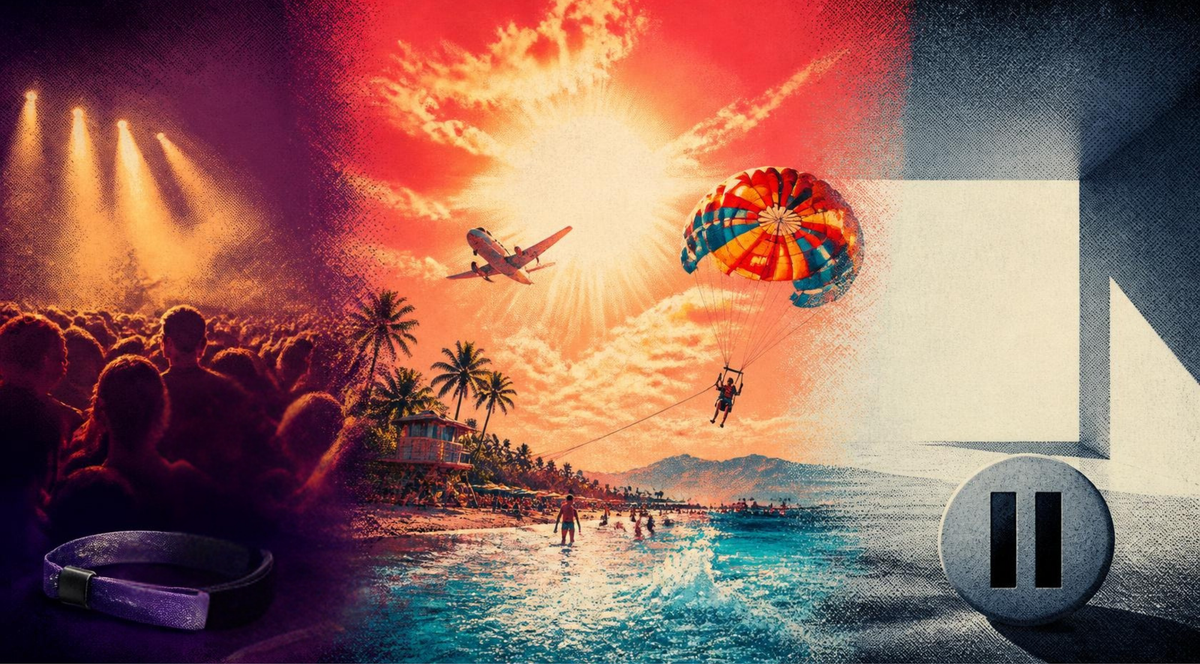
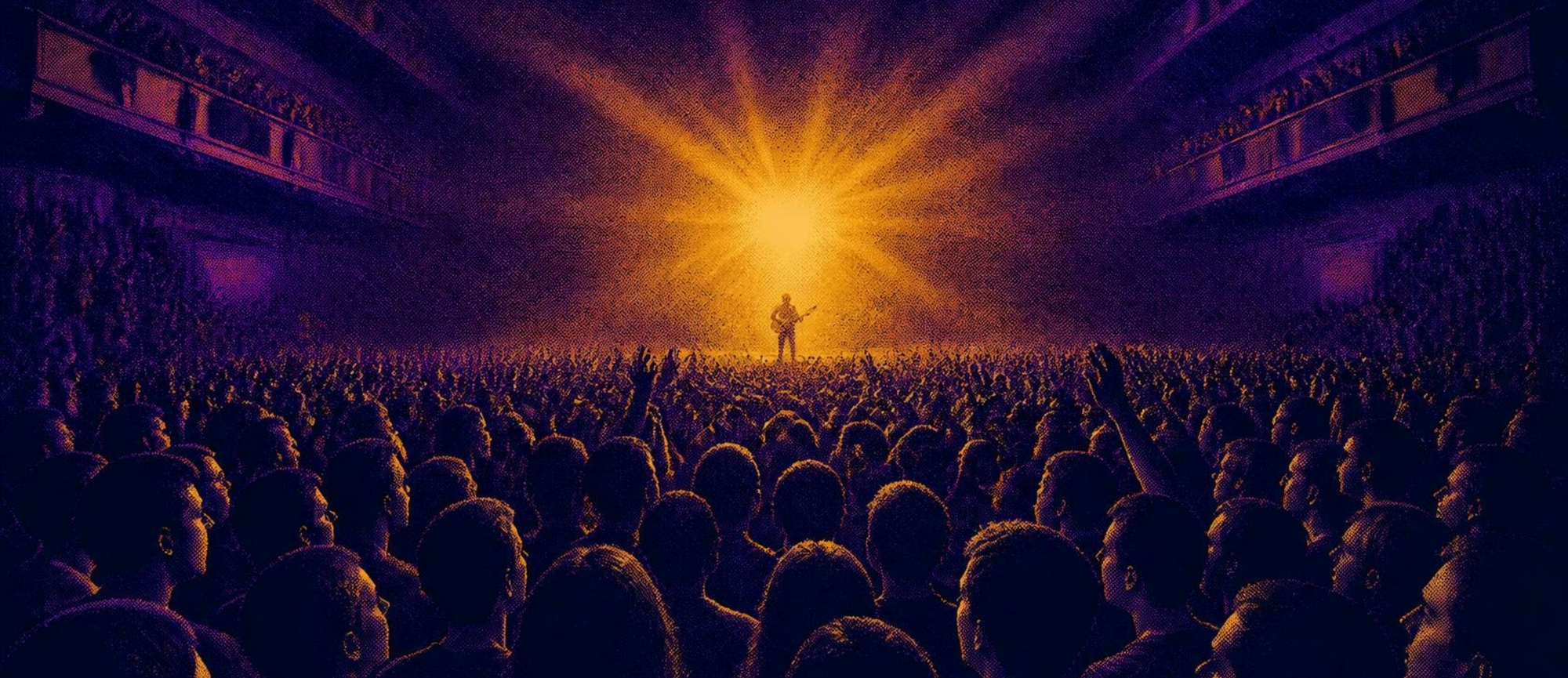
The era of phone free concerts is here. Yes. Finally here. Phoebe Bridgers sold out arenas on her Lost Tour without a single fan posting a video. No TikTok clips. No Instagram reels. No shared content flooding the feeds of people who weren’t there. Every phone locked in a Yondr pouch from the moment the lights went down.
The conventional wisdom in live event marketing is that UGC and social sharing are the engine of modern concert culture. You need the content. You need the clips. You need the algorithmic reach that comes from thousands of people posting the same moment simultaneously. And that is somewhat true. But…Bridgers ran the opposite experiment. And sold out every date.
The absence of social media didn’t diminish the experience. It amplified it. And the cultural conversation generated by that absence turned out to be more powerful than any clip would have been.
Food for Thought
The phone-free concert works as a marketing paradox because scarcity is doing the work that content used to do.
When nobody can post a video, the only way to know what happened inside that room is to have been there. That transforms the live experience from a content source into a genuine cultural artifact. Something worth seeking out precisely because it can’t be reproduced, shared, or algorithmically distributed.
This connects directly to something we’ve been tracking across recent editions. Feeling is the product. The mainstream is where it ends up. Bridgers created the conditions for genuine collective emotion by removing the mechanism that most live events use to dilute it, the phone in the air, the eye trained on a screen rather than a stage.
For brand strategists and communications professionals designing live experiences, this explains something different: If the presence of content capture infrastructure is actually degrading the emotional quality of the experience, what are you optimizing for? Reach or resonance?
The absence of shareable content created more genuine cultural conversation than a thousand TikTok clips ever could.
Baywatch Just Reminded It That Fun Is a Strategy Too.
Why it Matters
Twenty seconds into the first trailer for Fox’s Baywatch reboot, a plane crashes into a parasail. A few seconds later, the lead character rides the submerged plane like a kneeboard while his co-worker pulls him on a speedboat.
It’s insane. It’s extravagant. And it’s exactly what the cultural moment was waiting for.
The Wrap called it proof that TV is growing out of its emo phase. That’s a useful way to frame it. For the better part of a decade, the dominant prestige model in television demanded darkness, complexity, and emotional weight. Audiences rewarded it. Critics celebrated it. Apple TV won 28 Emmys this year with content that takes itself seriously in the best possible way.
And now Baywatch is back. Unapologetically, loudly, and with planes crashing into parasails in the first thirty seconds.
The cultural appetite pendulum just swung. And I believe Fox read it before most networks did.
Food for Thought
Reading the cultural moment accurately is one of the most underrated skills in communications. Not where the audience was two years ago. Not where the prestige conversation is happening right now. Where the emotional appetite is pointing next.
Lets continue to use TV as the example. Television’s prestige era produced extraordinary work. It also produced audience exhaustion. After years of demanding, emotionally costly storytelling, a significant portion of the audience stopped wanting to be challenged and started wanting to be entertained in the simplest possible sense. Hence also, the real wives of whatever city. Why? To laugh. To be thrilled. To watch a lifeguard dive into a flaming ocean without having to process complex moral ambiguity afterward.
Audiences move through emotional phases collectively, and the brands and campaigns that perform best are the ones that recognize the phase transition before it becomes obvious.
The communications lesson here is that Baywatch works as a cultural moment right now because it’s completely honest about what it is. It doesn’t try to claim something it doesn’t have. It doesn’t hedge its identity with a darker subplot or a message about climate change on the beach. It commits fully to the thing it was always built to be, spectacular, sun-drenched, ridiculous entertainment, and trusts that the audience arriving at this inflection point is ready for exactly that.
Brand authenticity isn’t only about values and purpose. Sometimes it’s about knowing that you’re the fun one in the room, leaning into that completely, and timing your arrival to the moment when the room needed fun the most.
The brands that read it in advance are the ones that make cultural moments. But the most interesting brands aren’t even reading the pendulum. They’re deciding where it goes next.
Netflix Cut 1,000 Jobs and Said Almost Nothing. For a Storytelling Company, That’s the Real Story.
Why it Matters
Netflix cut 1,000 jobs yesterday. 6% of its global workforce. Its largest round of layoffs since 2022. Product, technology, legal, and HR teams hit hardest.
All they said was: “Our mission to entertain the world is ambitious, and delivering on it requires us to be disciplined about where we prioritize our people and resources.”
That’s it.
No narrative about what Netflix is becoming. No context. Just efficient corporate restructuring language leaked to the Wall Street Journal and confirmed with a single brief statement.
And that is worrisome for a company whose entire brand is built on bold storytelling.
I think it speaks to an awful truth about our industry.

Food for Thought
Here’s a paradox. Netflix is a company at a genuine strategic inflection point, transitioning from a decade of hypergrowth into something it hasn’t fully defined yet. And the communications architecture around that transition is almost entirely absent.
Sarandos said publicly last month that the company is “not growing as fast as I want.” That’s an honest statement from a leader acknowledging a real challenge. But it’s a data point without a narrative. It tells you where the company is without telling you where it’s going.
The most difficult communications challenge for any market leader isn’t managing crisis. It’s managing transition. Crisis has a clear script: acknowledge, address, resolve. Transition is harder because it requires telling a story about the future before that future is fully visible. It requires the organization to articulate not just what it’s cutting but what it’s becoming.
But nobody at Netflix is saying it.
The memo language of “disciplined choices” and “focused resources” is the communications equivalent of leaving a room without saying goodbye. Technically adequate. Strategically empty. And for 1,000 people losing their jobs, and for a market watching closely before earnings on October 20, strategically empty is its own kind of message. Let’s see what the narrative ends up being when earning comes.
Market leaders in transition don’t just need to manage what they’re cutting. They need to own the narrative of what they’re building. Right now, Netflix is letting everyone else write that story, when Netflix was always the one challenging that narrative.
Other Facts this week
🎙️ Check how Netflix just changed the sports streaming game — it landed exclusive rights to broadcast the 2030 FIFA World Cup in Spain.
📢 Read why Kim Cattrall fronts Meltwater's latest campaign and what it signals about how B2B brands are rethinking their creative approach.
⌚ See what Oura's latest push reveals about where wellness tech is headed — beyond personal records and into something much broader.
🏈 Worth a look: Disney+ is streaming the 2027 Super Bowl across the US and 55 countries, marking a major shift in how live sports reaches global audiences.