Netflix's Argentina Strategy and La Liga's Retro Matchday: Why Deep Cultural Fluency Is Winning in 2026

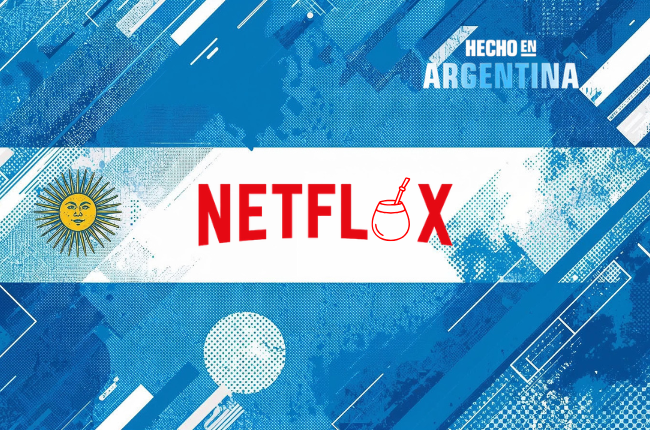
Hecho en Argentina: How Netflix is simply Cultural Fluency. Period.
Why it Matters
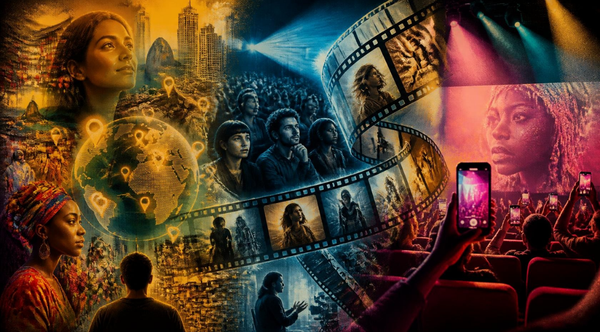
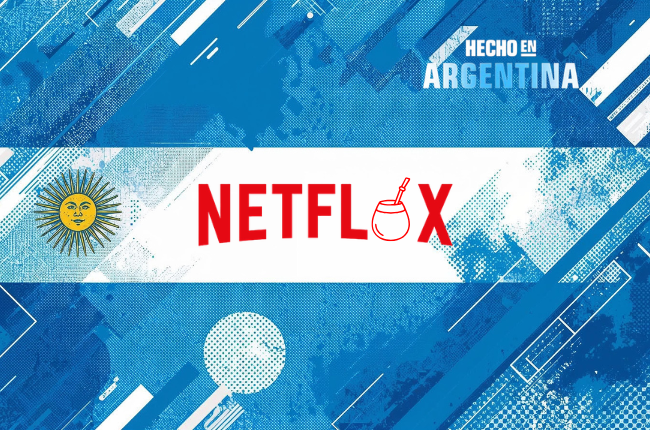
Netflix's "Hecho en Argentina" campaign is something structurally different from anything the industry has tried before: it's a bet that deep cultural immersion, not surface-level adaptation, is the actual product. Netflix is signaling that Argentine cultural identity is a primary global asset rather than a regional accommodation.
Yes, Argentina holds the world record for psychologists per capita. I get it, being from Argentina. But the mechanism here runs past the promotion. Netflix frames its appeal not in commercial terms but in creative ones: the country's audiovisual heritage and its capacity to tell local stories whose significance makes them universal. It is not just translating content. It is translating habits, neuroses, and humor.
Netflix isn't licensing Argentine culture; it's embedding inside it. That's not a localization pitch. That's a nation-brand play at global scale.
Food for Thought
Netflix used IP-as-Ambassador, and that's a smart play. But here's the uncomfortable implication of this campaign: if cultural authenticity is now the competitive advantage, the model only works when the fluency is earned, not performed. The office in Villa Crespo, the 19-title slate, the Mafalda announcement. These aren't PR moves bolted onto a content strategy. They are the content strategy. The question for every other platform watching is whether "cultural relevance" can be acquired on a shorter timeline, or whether Netflix has built something that simply cannot be reverse-engineered by a competitor who shows up, greenlights two local shows, and calls it a regional strategy.
The Heritage Play: How La Liga Turned One Weekend Into a Cultural Brand Statement
Why it Matters
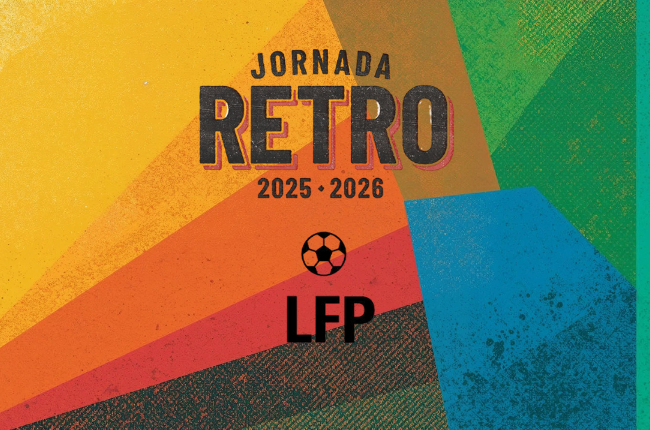
La Liga's first official Retro Matchday was not a nostalgia exercise. It was a coordinated brand infrastructure play executed at a system level. The distinction matters because it speaks to a cultural fluency that few brands, especially in sports, truly understand. The framing was a brand brief rather than a sports communication. The goal was to position football heritage at the heart of the cultural and creative conversation.
On April 10, that brief materialized across 38 clubs simultaneously. While the most globally recognized teams like Barcelona and Real Madrid did not participate in the full kit rollout (a topic for another article), the scale of the coordination was undeniable. Every touchpoint moved at once: pixelated broadcast scoreboards, Puma match balls wrapped in 1990s geometric shells, and referee kits pulling from the 1994 World Cup aesthetic. Even the Replay logo was updated. The mechanism relied on a simple understanding: heritage is not just sentiment. It is commercial infrastructure. Cultural programming in sports is a legitimate differentiator for a brand that has seen explosive reach in the last decade. By projecting the past into future growth, La Liga proved that history can be a primary asset rather than just a memory.
Food for Thought
Retro Matchday proves that La Liga is not following a playbook. It is writing one. However, this strategy introduces an interesting tension. When a league becomes this fluent in its own aesthetic, does it risk turning the competition into a "content product"? For the broader narrative, the risk is the "packaging trap." This happens if the aesthetic becomes a more central element in the league than the game itself. For this massive thing in sports, while treating this as a brilliant stunt is effective, redefining expectations for viewers, partners, and fans could dangerously transform the league into an ethereal asset. The danger is becoming more concerned with these elements than the play itself.
Quote of the Week
"There is nothing more important than giving the audience visual stories, and they can be in any form, but we need to tell more original stories."
by Steven Spielberg

The Audio Bridge: Can Streaming Podcasts Could Solve the Hiatus Problem?
Why it Matters
For streaming giants like Netflix or HBO Max, the most dangerous threat to a brand isn't a bad review; it is the hiatus gap. When a blockbuster like Stranger Things, House of the Dragon, The Last of Us, or Bridgerton takes two years to return, the cultural conversation doesn’t just slow down, it evaporates. Reason why streamers are no longer treating podcasts as ancillary, YouTube-style content. They are deploying them as a primary subscriber retention tool.
The lesson, if any here, for PR folks is about contextual persistence. We are increasingly pushed to maintain absolute narrative fluency - a consistent, year-round flow of attention-grabbing campaigns. A complementary library of podcasts allows a brand to inhabit the user's routine even when the cameras aren't rolling. But this strategy brings a new challenge: at what point does "retention" cross the line into narrative overload? I wonder that. We must identify that line to avoid becoming white noise in an already crowded library.
Food for Thought
The real question of this strategy is the shift from podcasts-as-promotion to podcasts-as-IP. Traditional entertainment PR is built on the tentpole model. Streaming in itself already changed this. But by moving aggressively into the audio space, my fear is becoming a Narrative Utility. The goal is to make the brand a permanent fixture in the daily routine of the user rather than just a seasonal guest, and trust me I get it. However, does constant communication devalue the "event" status of a major premiere? If a brand is always talking, it loses the psychological power of the grand entrance? Comms teams must decide if they are truly building a bridge to the next big thing or simply creating background noise that dilutes the scarcity and prestige of the primary IP. In 2026, where saturation is the new norm, the most radical PR move might eventually be knowing when to be quiet (?).
Other Facts this week
📌 Check how Pinterest is positioning itself as an antidote to doomscrolling with real-world inspiration features
📧 Read why email newsletters are becoming the distribution channel brands actually control
🏷️ See what Coca-Cola's logo experiment reveals about the growing invisibility of brand names
🎬 Worth a look: the first trailer for The Hunger Games: Sunrise on the Reaping just dropped